خیمہ افلاک کا استادہ اِسی نام سے ہے
نبضِ ہستی تپش آمادہ اِسی نام سے ہے
چشمِ اقوام یہ نظّارۂ ابد تک دیکھے
رفعتِ شانِ وَرَفَعْنَا لَکَ ذِکْرَکَ دیکھے
“The great tent of the heavens stands firm by his name;
The pulse of existence beats with fervour by his name.
May the eyes of nations behold this vision for all eternity,
And witness the sublimity of: ‘Did We not exalt your remembrance?’”
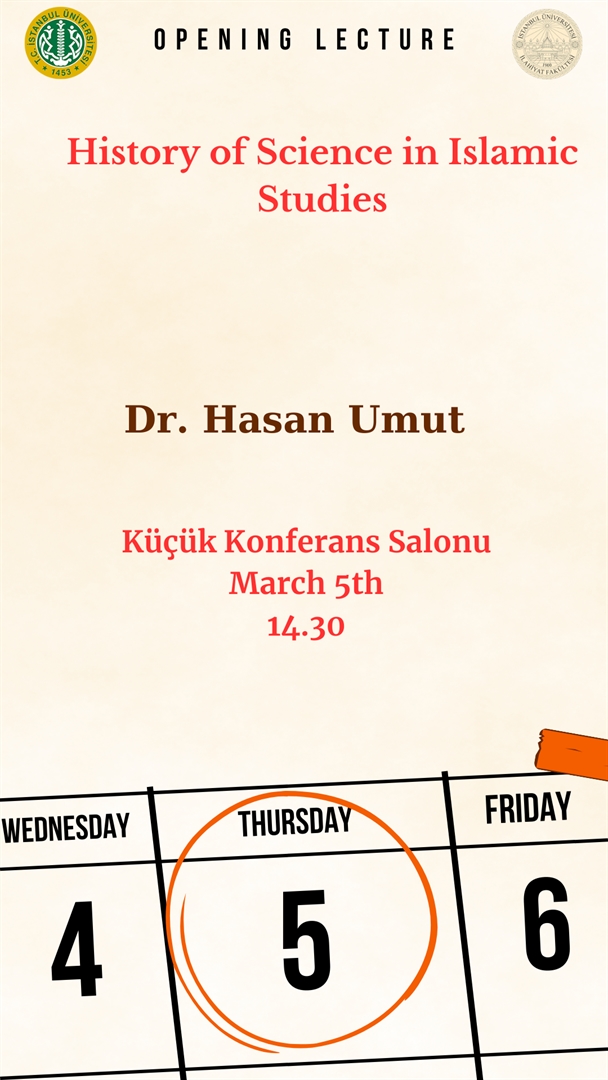
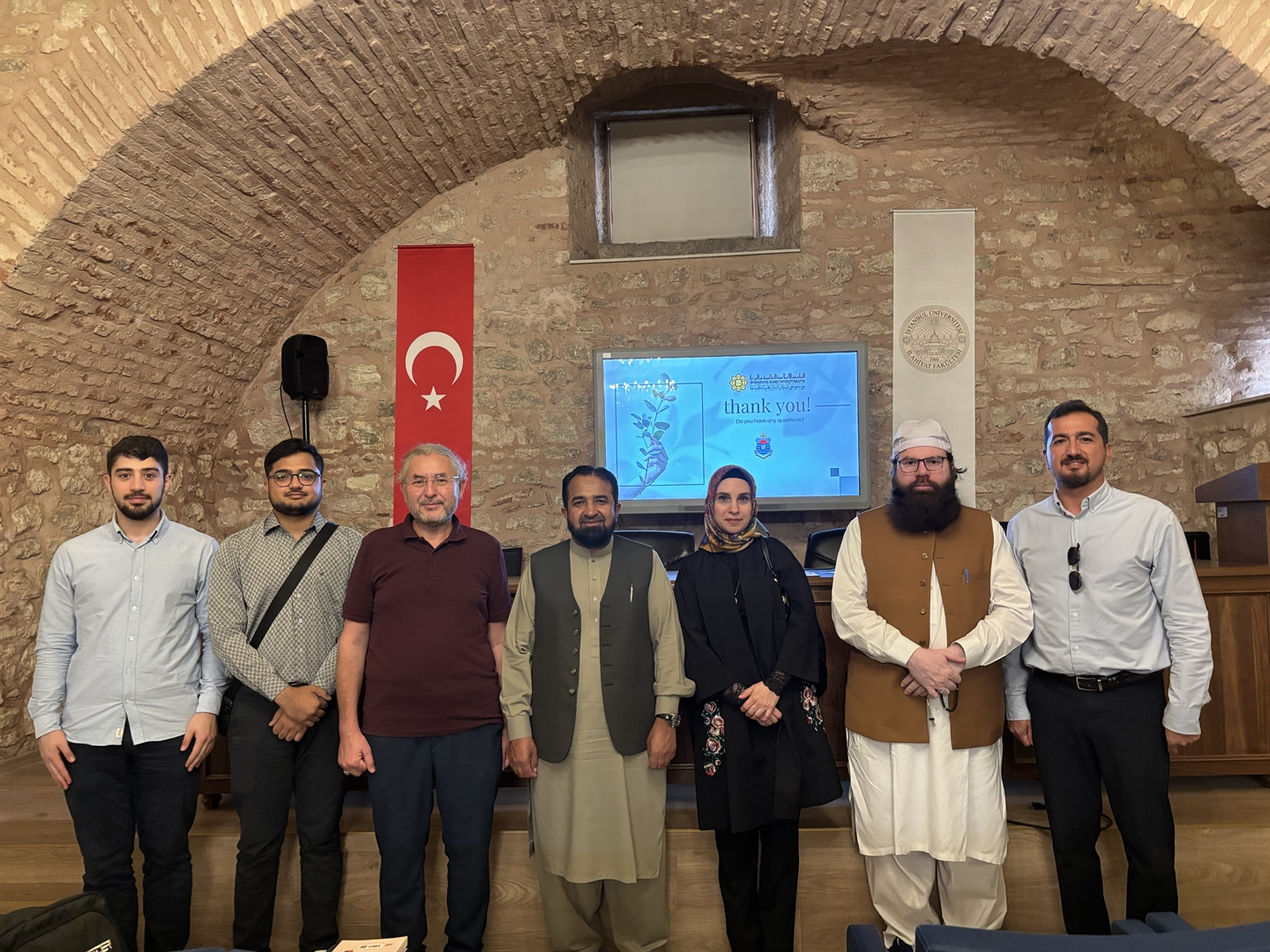
The programme entitled “Opening Lecture: Iqbal’s Intellectual Legacy – ‘Allama Iqbal: The Thinker of Pakistan’”, organised by the Department of Logic at Istanbul University Faculty of Theology, was held on 17 September 2026 in the Conference Hall of the Dean’s Building.
The lecture was delivered by Dr Saeed Ahmad Saeedi, Chairman of the Department of Islamic Knowledge at the University of the Punjab. Allama Muhammad Iqbal’s thought was examined through the interconnected themes of khudī (selfhood/servanthood), deep engagement with the Qur’an, the Prophetic example, Rumi, and ijtihād.
The above verses from Jawab-e Shikwa, cited by Saeedi during the lecture, highlighted the central place of the Prophet Muhammad in Iqbal’s thought. The Qur’anic reference, “Did We not exalt your remembrance?”, presents the Prophetic example as a point of reference through which the truth conveyed by the Qur’an is remembered and embodied in human life. In the presentation, the Prophet was described as the ideal human being and the perfect embodiment of khudī. Devotion to him was therefore presented not merely as emotional attachment, but as an exemplary orientation capable of shaping one’s character, purpose, and moral direction.
Within this framework, engagement with the Qur’an was understood as more than recitation or the repetition of inherited rulings. Iqbal’s approach calls for deep and sustained engagement with the Qur’an, bringing its meaning into the intellect, conscience, and lived experience. The Qur’an was presented as a living source of guidance that addresses both reason and the heart, while tadabbur—deep reflection—was emphasised over unreflective reading.
This understanding provided the foundation for Iqbal’s conception of ijtihād. Ijtihād was presented as a vital and continuous intellectual activity through which Muslims respond to changing circumstances while remaining firmly connected to the Qur’an and Sunnah. The task of the mujtahid is therefore neither to repeat inherited forms without reflection nor to detach renewal from the foundational sources of Islam. Rather, it is to exercise responsibility and informed reasoning in order to preserve the enduring meaning, wisdom, and guidance of those sources under changing historical conditions.
In this sense, renewal does not mean abandoning continuity. It means carrying the wisdom of the Qur’an and the Prophetic example into new circumstances without severing their original meaning. Iqbal’s critique of blind imitation (taqlīd) was thus presented not as a rejection of tradition itself, but as a call to overcome intellectual stagnation through conscious reasoning, responsibility, and renewed engagement with the primary sources.
The individual dimension of this intellectual movement was expressed in another verse cited by Saeedi in his discussion of khudī:
اپنے من میں ڈوب کر پا جا سراغِ زندگی
تو اگر میرا نہیں بنتا نہ بن، اپنا تو بن
“Dive deep within yourself and discover the secret of life;
If you will not be mine, then do not—but at least become your own.”
These lines underline the importance of personal responsibility in the religious life of the individual. For Iqbal, khudī does not signify an individuality detached from divine guidance. Rather, it describes the journey of a person who takes the Prophetic example as a measure, engages deeply with the Qur’an, and assumes responsibility within his or her own time through ijtihād.
The programme was moderated by Prof. Dr İsmail Latif Hacınebioğlu and attended by Dr Zeynep Münteha Kot, Coordinator of the English Theology Undergraduate Programme, together with faculty members and students. The event concluded with a question-and-answer session.
Photo Gallery