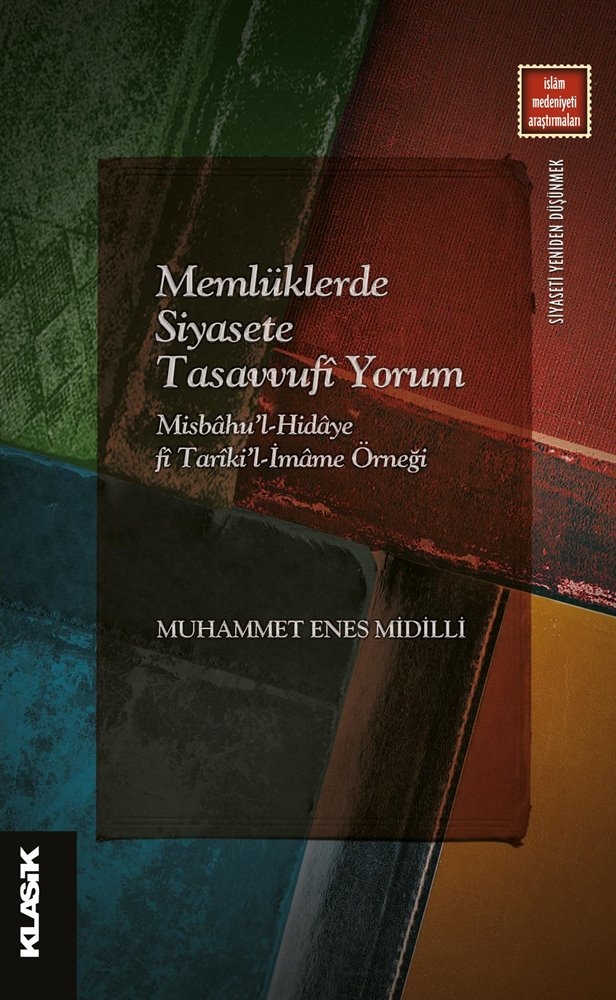
The work Sufi Approaches to Political Thought in the Mamluk Sultanate: Misbāḥ al-Hidāya fī Ṭarīq al-Imāma as a Case Study by Dr. Muhammet Enes Midilli was published by Klasik Yayinlari within the series titled “Siyaseti Yeniden Düşünmek [Rethinking Siyāsa]” edited by Prof. Özgür Kavak.
Misbāḥ al-Hidāya fī Ṭarīq al-Imāma, a Sufi treatise on imāma—the institution of political leadership in Islamic political thought—was authored by an anonymous author. Composed during a period in which an ideal imam could not be found either from the perspective of fiqh or Sufism, the treatise was written as a guide intended to foster the moral and spiritual refinement of the ruler who attained the position of imamate/sultanate through coercive power. By doing so, the author sought to restrain the ruler’s authority and arbitrary exercise of power through ethical-Sufi refinement.
Approximately half a century after its identification, Misbāḥ al-Hidāya is examined in detail in this study, critically edited for the first time so as to become accessible to the scholarly community, and likewise translated into another language—Turkish—for the first time. Filling a significant gap in the identification and assessment of Sufi political treatises within the literature on Islamic political thought, this work brings to light a remarkable Mamluk-period epistle for researchers seeking to understand the contributions of Sufis to political thought.
Photo Gallery